
The Power of a Face
I'll Be Gone in the DarkThis thread traces how an unknown killer’s hidden face shapes fear and investigation, and how Michelle McNamara turns identification into a challenge to his power.
increasing Bearing strength in each event
 decreasing
Bearing strength in each eventdecreasingThe Alley Question

The Alley Question
A Face Missing
After the murder of Kathleen Lombardo in Oak Park, Illinois, fourteen-year-old Michelle McNamara walked to the alley and picked up pieces of her shattered Walkman. The object made the crime tangible, but its central absence—the killer’s identity—became the question that held her attention.
Mystery as Power
The case was never solved. For Michelle, the unknown face seemed to possess its own force: the killer could remain frightening partly because no one could attach a name or ordinary life to him. Her later writing would keep returning to that blank space, treating identification as more than a police objective.
The moment became the origin story of her work, but not a simple promise that every mystery yields to persistence. It established a durable tension: searching might reduce a killer’s power, while the lack of an answer could keep victims and communities living with uncertainty.
The Masked Stranger
The Masked Stranger
A Manufactured Unknown
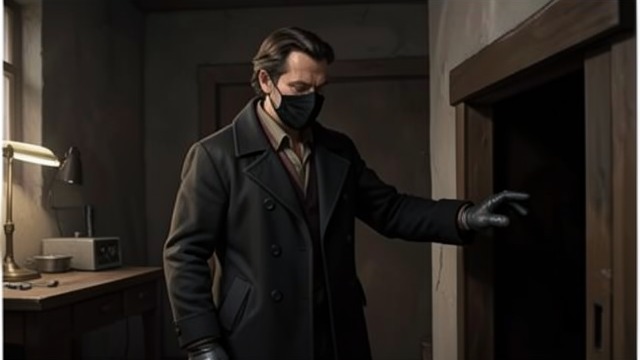
The East Area Rapist / Original Night Stalker hid behind masks, gloves, darkness, and a deliberately altered voice. He learned details about the people whose homes he entered, so his victims faced an unnerving imbalance: he knew their routines while they could not see who was directing the attack.
A Name for the Pattern
As attacks spread across California, separate jurisdictions and labels obscured the possibility that one offender connected them. Michelle McNamara eventually gave the unidentified man a name, the Golden State Killer, to make the sprawling pattern easier to grasp and discuss. Naming the series did not reveal the person behind it, but it made the scope of his actions harder to ignore.
The label was a tool for recognition, not an explanation of motive or character. The book insists on the distinction between knowing what a person did and knowing who he was; the first can be established through evidence even when the second remains beyond reach.
The Name in the Stain

The Name in the Stain
Evidence Outlasts Memory
In the 1990s, improved DNA methods allowed investigators to revisit evidence preserved from murders that had resisted explanation. The biological material from the Harrington and Witthuhn cases produced a connection, and Mary Hong later found that the profile also matched evidence from the Janelle Cruz case.
A Pattern Becomes Legible
The matches changed the meaning of old crimes: cases once treated as separate mysteries now belonged to a larger series. Further comparison linked the Orange County evidence to Northern California rape cases, giving investigators a scientific basis for joining histories that had previously been divided by geography and agency boundaries.
DNA did not supply a face or a motive. It narrowed the mystery by establishing that the same unidentified person had left evidence across multiple scenes. The distinction matters: the killer’s biological identity could be tracked even while his social identity remained unknown.
The Doorbell Prophecy
The Doorbell Prophecy
A Future Confrontation Imagined
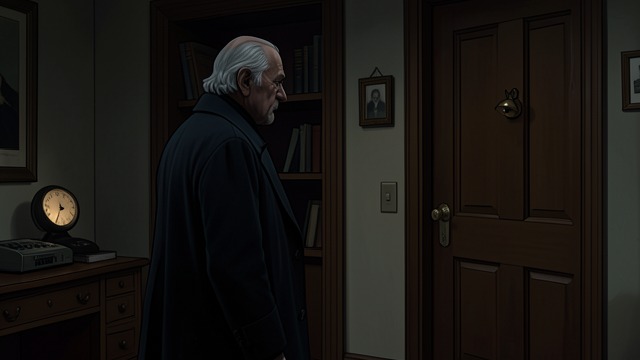
In the epilogue, Michelle McNamara addresses the killer as an old man and imagines the moment when someone comes to his door. The scene reverses the familiar arrangement: the hidden watcher, once in control of other people’s homes, is now the person who hears an approaching visitor and must show his face.
Hope Without Resolution
The passage is written as a prediction, not a report of an arrest. At the book’s close, the Golden State Killer’s identity remains unknown, and the expected confrontation belongs to the future the writer hopes investigators will reach. Her direct address makes that hope vivid without presenting it as accomplished fact.
The imagined demand to step into the light gathers the book’s central idea into one image. The killer’s anonymity once magnified his threat; exposure might diminish it. Yet the ending preserves the difference between a desired outcome and a solved case.
Recognition Without Closure
Recognition Without Closure
What the Record Can Establish
The book gathers testimony, physical evidence, case histories, and investigative theories into a portrait of an offender whose crimes crossed counties and years. That record supports connections among many attacks, but it cannot provide the final biographical fact readers might expect: the killer’s name.
The Limits of Knowing
Michelle McNamara’s posthumous book ends with investigative work still underway. Her collaborators organize research and leave readers with unresolved questions, while the closing appeal asks for recognition rather than offering a solved identity. The unfinished ending is therefore part of the evidence about the case’s state, not a concealed revelation.
The thread closes on a distinction between factual certainty and personal explanation. Investigators can establish a pattern and pursue a suspect through forensic methods, but attaching a name would not automatically explain the violence or restore what victims lost. The book values identification as accountability, while resisting the fantasy that it would make the past simple.
August 1984
1976–1986
1996–2001
The book’s closing pages
At the book’s conclusion in 2017
